Pay Tax by Card

Chandan Singh
| 13-04-2026
 · News team
Holding a card over a laptop is a modern convenience, especially when a deadline is near and a tax bill or government fee needs to be cleared quickly.
But convenience is only one part of the decision. Fees, processor rules, payment limits, and tax type all affect whether using a card is sensible.
Easy Path
Card payments for taxes are handled by third-party processors, and the process is described as safe and secure because the payment information is used only to process the transaction. That matters for taxpayers who hesitate at the checkout step, especially when the payment is being made outside a traditional bank-transfer flow.
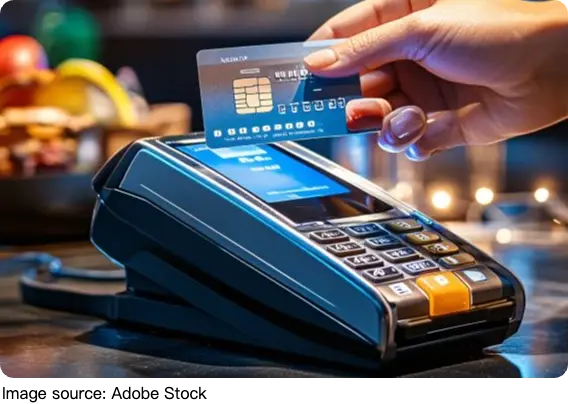
The channel is also flexible. Payments can be made online or over the phone, and digital wallets such as PayPal, Click to Pay, and Venmo can be used for eligible payments. Major card networks are accepted, which gives taxpayers several ways to settle a balance without mailing anything.
From a user perspective, that flexibility is the appeal. A card can clear a deadline from almost anywhere, and no voucher is required when paying by card. For someone working between meetings, that simplicity can feel worth paying for. The harder question is how much the convenience actually costs.
Count Fees
Card processing is not free and taxpayers should compare processors before choosing one. Pay1040 lists a fee for personal debit cards and a percentage-based fee for credit cards with a minimum charge. ACI Payments lists similar structures with slightly different rates.
Those numbers matter because the cost difference grows with the payment amount. On smaller balances, the gap may look trivial. On larger balances, percentage-based credit fees can become expensive quickly. A large credit card payment can generate a fee in the high hundreds of dollars depending on the processor.
Just as important, no part of the card service fee goes to the tax authority. That is a convenience fee paid to the processor, not a tax payment itself. For individuals, that means rewards or short-term cash flow relief should be weighed carefully against a cost that can erase much of the benefit from using a credit card in the first place.
Know Limits
Several operating rules are easy to miss. The number of card payments allowed depends on the tax type and payment type. Employers' federal tax deposits cannot be paid by card. And for card payments of large amounts, special requirements may apply. Anyone paying a large amount should read the rules before assuming checkout will be simple.
There are also practical follow-up details. If a card payment needs to be canceled, the taxpayer must contact the card processor rather than the tax authority. Card statements will show the tax payment and the convenience fee separately. And if a person overpays, the excess may be refunded unless a debt is owed elsewhere on the account.
These points may sound administrative, but they shape the real user experience. A rushed taxpayer often focuses only on whether the screen accepts the card. A better approach is to ask what happens after the payment posts, what the statement will show, and whether any exception applies to the type of payment being made.
Better Call
For some taxpayers, card payment is still the right choice. A business may want to preserve bank-account liquidity for a few more days. A traveler or contractor may be away from regular banking access. Someone may also prefer the documentation discipline of having the payment recorded through a card statement and an online processor at once.
But the best choice is not always the fastest click. Bank-account options such as Direct Pay and business tools such as EFTPS can avoid card processing costs entirely. Card processing fees may be deductible for business taxes, which can matter for firms but does not make the fee disappear.
Expert Insight
Ed Slott, tax advisor, said that the decision to pay taxes by credit card should always begin with a careful calculation of the processing fee against any benefit received, because in most cases the convenience cost exceeds any reward earned, making direct bank payment the smarter financial choice for the majority of taxpayers.
The real finance question is simple: what are you buying with the fee? If it is deadline certainty, temporary cash-flow flexibility, or operational convenience, paying by card may be reasonable. If it is only habit, the cost may be harder to justify. Convenience is valuable, but it is not free, and the fine print still decides the true cost. Using a card to pay taxes or fees online can be smart, but only when the math and the rules support it.